SLEEP
Diphenhydramine for Sleep (ZzzQuil, Unisom, Benadryl): Risks and Why Experts Advise Against It
Diphenhydramine (ZzzQuil, Benadryl) and doxylamine (Unisom SleepTabs) are OTC antihistamine sleep aids. Here is what their labels say, Unisom vs. ZzzQuil, why tolerance builds within days, and why sleep and geriatric guidelines advise against them for chronic insomnia and older adults.

The Zest Team
· 6 min read
Diphenhydramine for sleep is the most common over-the-counter approach: it is the active ingredient in ZzzQuil, Unisom SleepMinis and Benadryl. Its cousin doxylamine is in Unisom SleepTabs and ZzzQuil Ultra. Both are first-generation antihistamines labeled for occasional sleeplessness. They may help for a night or two, but tolerance builds within days. The sleep medicine guideline advises against diphenhydramine for chronic insomnia, and geriatric guidelines tell older adults to avoid both.
Here is what the Drug Facts labels and research say. This is educational information, not medical advice; talk to a licensed clinician before starting or stopping any medication.
Diphenhydramine and doxylamine at a glance
| Generic names | Diphenhydramine HCl; doxylamine succinate |
|---|---|
| Brand names | Diphenhydramine: ZzzQuil (Procter & Gamble), Unisom SleepMinis (Chattem), Benadryl (Kenvue). Doxylamine: Unisom SleepTabs (Chattem), ZzzQuil Ultra (Procter & Gamble) |
| Drug class | First-generation (sedating) antihistamines |
| FDA status and use | Over the counter, no prescription. Sleep-aid labels: relief of occasional sleeplessness or difficulty falling asleep |
| Controlled substance | No |
| Strengths | Diphenhydramine 25 mg capsules or 50 mg per 30 mL liquid; doxylamine 25 mg tablets |
| Usual dose (label) | Diphenhydramine 50 mg at bedtime if needed, once per 24 hours; doxylamine 25 mg 30 minutes before bed, once daily |
| Not for | Children under 12 (sleep-aid labels); use with any other product containing the same ingredient (for diphenhydramine, even one used on skin) |
| Ask a doctor first | Breathing problems such as emphysema or chronic bronchitis, glaucoma, trouble urinating from an enlarged prostate, or if you take sedatives or tranquilizers |
| Stop and see a doctor | If sleeplessness lasts more than 2 weeks |
| Generic available | Yes, store-brand "nighttime sleep aid" versions of both |
How do antihistamine sleep aids work?
Both drugs block histamine H1 receptors. Drowsiness is the main side effect of first-generation antihistamines, and sleep aids sell that side effect as the benefit. These drugs are also strongly anticholinergic, meaning they block acetylcholine, which drives many of their side effects.
That is a different mechanism from prescription sleep medications such as benzodiazepines, Z-drugs, or the orexin-blocking DORAs. Benadryl itself is labeled as an allergy medicine, not a sleep aid: its label says "marked drowsiness may occur."
How to take antihistamine sleep aids (dosage)
- Diphenhydramine sleep aids (ZzzQuil, Unisom SleepMinis): 50 mg at bedtime if needed, no more than one dose per 24 hours, for adults and children 12 and over.
- Doxylamine (Unisom SleepTabs, ZzzQuil Ultra): one 25 mg tablet 30 minutes before bed, once daily.
- The Unisom SleepTabs label says not to use it unless you have time for a full night's sleep, and not to drive or operate machinery.
- Don't double up: the labels say not to combine with any other product containing the same ingredient, including diphenhydramine creams.
- Avoid alcohol, and ask a pharmacist first if you take sedatives or tranquilizers.
- Stop and see a doctor if sleeplessness lasts more than 2 weeks; the labels note insomnia may be a symptom of a serious underlying illness.
Does diphenhydramine work for sleep? What the trials found
In a 2005 randomized trial in Sleep, 184 adults with mild insomnia took diphenhydramine 50 mg, a valerian-hops product or placebo. Diphenhydramine modestly improved sleep efficiency compared with placebo over the first two weeks, but showed no significant difference on any sleep-lab measure of sleep continuity.
The effect also fades fast. In a 2002 crossover study, 15 healthy men took diphenhydramine 50 mg twice a day. Sleepiness was clearly higher on day 1, but by day 4 it was indistinguishable from placebo: tolerance was complete within about three days.
The American Academy of Sleep Medicine's 2017 guideline suggests clinicians not use diphenhydramine to treat chronic insomnia (a weak recommendation).
Antihistamine sleep aid side effects
Drug Facts labels don't include a side-effect rate table. The labels and guidelines describe:
- Next-day grogginess and impaired driving. In a driving-simulator trial, a single daytime 50 mg dose of diphenhydramine, taken before driving, impaired driving more than alcohol at about 0.1% blood alcohol, and people's own sense of drowsiness did not predict how impaired they were. For other causes of morning fog, see what sleep inertia is.
- Anticholinergic effects. The 2023 AGS Beers Criteria cite confusion, dry mouth and constipation. The labels flag glaucoma and trouble urinating from an enlarged prostate, which these drugs can worsen.
- Tolerance. The Beers Criteria note tolerance develops when they are used as sleep aids.
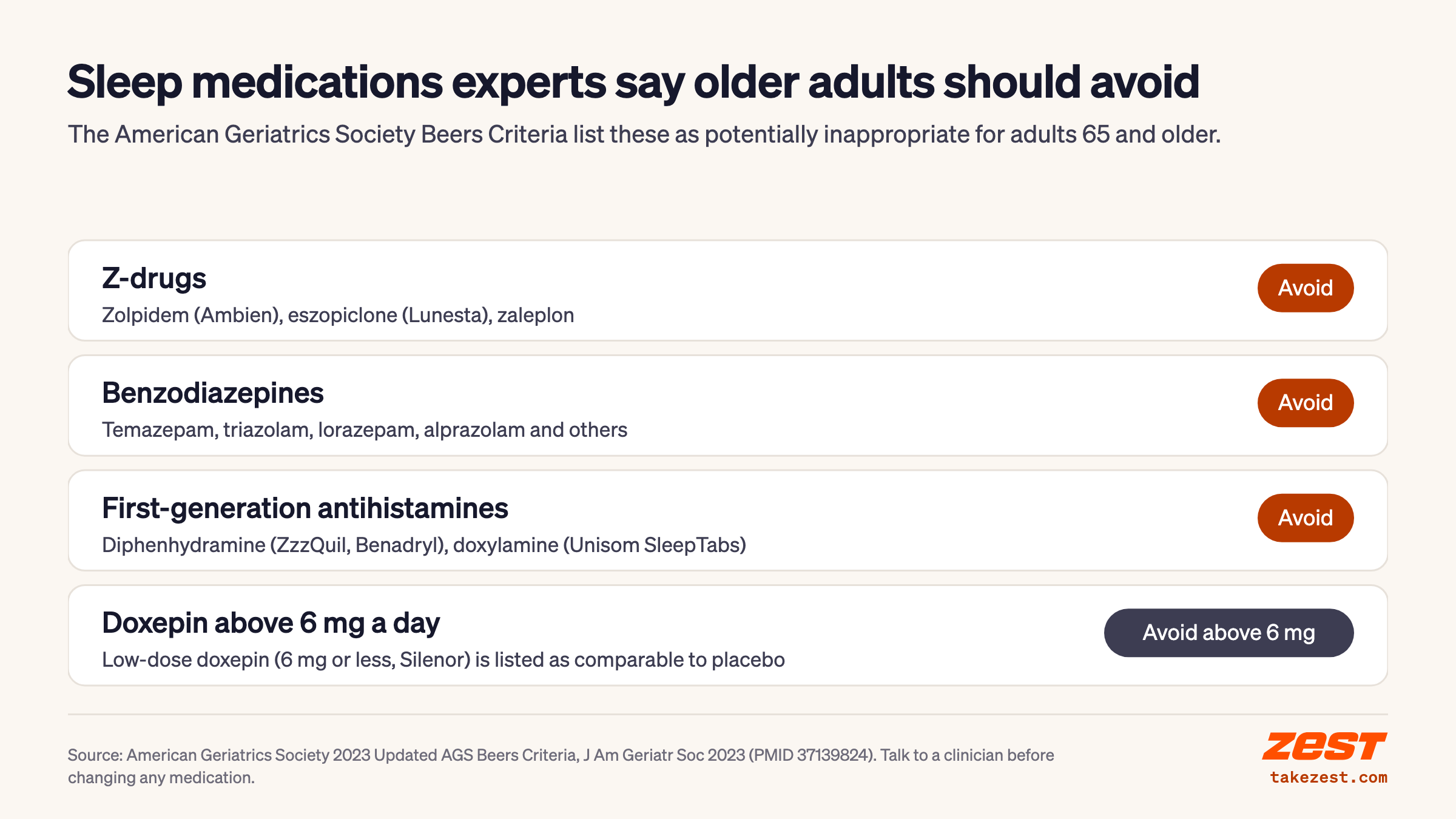
- Older adults. The Beers Criteria advise people 65 and older to avoid first-generation antihistamines, including diphenhydramine and doxylamine, because clearance slows with age and cumulative anticholinergic use is associated with falls, delirium and dementia.
- The dementia question. A 2015 JAMA Internal Medicine cohort of 3,434 adults 65 and older found that the highest cumulative use of strong anticholinergics was associated with a 54% higher risk of dementia. First-generation antihistamines were among the most common. This shows an association, not proof that the drugs cause dementia.
- Children. The labels say not to use these sleep aids under age 12. Benadryl's label says not to use it to make a child sleepy, and that it can cause excitability in children.
Unisom vs. ZzzQuil
The names don't tell you the ingredient. Both brands sell diphenhydramine and doxylamine products, so check the Drug Facts box.
| Product | Active ingredient | Label dose |
|---|---|---|
| ZzzQuil liquid | Diphenhydramine HCl | 50 mg (30 mL) at bedtime |
| ZzzQuil LiquiCaps | Diphenhydramine HCl | 2 × 25 mg at bedtime |
| Unisom SleepMinis | Diphenhydramine HCl | 2 × 25 mg at bedtime |
| Unisom SleepTabs | Doxylamine succinate | 25 mg, 30 minutes before bed |
| ZzzQuil Ultra | Doxylamine succinate | 25 mg, 30 minutes before bed |
Doxylamine vs. diphenhydramine
| Diphenhydramine | Doxylamine | |
|---|---|---|
| Label use | Occasional sleeplessness; helps you fall asleep | Helps reduce difficulty falling asleep |
| Dose | 50 mg at bedtime | 25 mg, 30 minutes before bed |
| Beers Criteria (65+) | Avoid | Avoid |
| AASM guideline | Suggests not using for chronic insomnia | Not addressed |
Neither label claims one is stronger.
Alternatives to discuss with a clinician
CBT-I is the usual first step for ongoing insomnia. If medication is needed, options to discuss include low-dose doxepin (Silenor), a prescription drug approved for trouble staying asleep at 3 or 6 mg. The Beers Criteria treat it differently from other sedating drugs: they list doxepin above 6 mg a day to avoid, and say the safety of 6 mg or less is comparable to placebo. See our guide to doxepin for sleep. Other options include the DORAs, such as daridorexant (Quviviq); they share warnings like next-day impairment and complex sleep behaviors, so they are not risk-free.
When to see a clinician about sleep
Antihistamine sleep aids need no prescription, but the labels say to see a doctor if sleeplessness lasts more than 2 weeks. A clinician can look for underlying causes and discuss CBT-I and prescription options. Good sleep habits and CBT-I remain the first step.
Zest RX for sleep. Zest is preparing to launch telehealth for sleep, connecting you with licensed providers who can evaluate whether a prescription option fits your needs. Join Zest RX early access.
Frequently asked questions
Is it safe to take diphenhydramine every night?
The labels are for occasional sleeplessness and say to see a doctor if it lasts more than 2 weeks. Tolerance to the drowsiness can develop within days, and the AASM suggests not using diphenhydramine for chronic insomnia.
The labels are for occasional sleeplessness and say to see a doctor if it lasts more than 2 weeks. Tolerance to the drowsiness can develop within days, and the AASM suggests not using diphenhydramine for chronic insomnia.
Unisom vs. ZzzQuil: what's the difference?
It depends on the product. Unisom SleepTabs and ZzzQuil Ultra contain doxylamine 25 mg; ZzzQuil liquid, ZzzQuil LiquiCaps and Unisom SleepMinis contain diphenhydramine. Check the active ingredient on the Drug Facts label.
It depends on the product. Unisom SleepTabs and ZzzQuil Ultra contain doxylamine 25 mg; ZzzQuil liquid, ZzzQuil LiquiCaps and Unisom SleepMinis contain diphenhydramine. Check the active ingredient on the Drug Facts label.
Is Benadryl bad for sleep?
Benadryl is labeled for allergies, and drowsiness is a side effect. Using it to sleep brings the same issues as diphenhydramine sleep aids: fast tolerance, next-day impairment and anticholinergic effects. The Beers Criteria advise older adults to avoid it.
Benadryl is labeled for allergies, and drowsiness is a side effect. Using it to sleep brings the same issues as diphenhydramine sleep aids: fast tolerance, next-day impairment and anticholinergic effects. The Beers Criteria advise older adults to avoid it.
Doxylamine vs. diphenhydramine: which is better?
No head-to-head result appears on either label. Both are sedating first-generation antihistamines with the same warnings, and the Beers Criteria list both as drugs older adults should avoid.
No head-to-head result appears on either label. Both are sedating first-generation antihistamines with the same warnings, and the Beers Criteria list both as drugs older adults should avoid.
Can you take ZzzQuil with alcohol?
No. The Drug Facts labels say to avoid alcoholic drinks while using these products. Benadryl's label adds that alcohol, sedatives and tranquilizers may increase drowsiness, which can add to next-day impairment.
No. The Drug Facts labels say to avoid alcoholic drinks while using these products. Benadryl's label adds that alcohol, sedatives and tranquilizers may increase drowsiness, which can add to next-day impairment.
Are antihistamine sleep aids safe for older adults?
The 2023 Beers Criteria advise adults 65 and older to avoid first-generation antihistamines, including diphenhydramine and doxylamine, citing confusion, constipation, tolerance and links between cumulative anticholinergic use and falls, delirium and dementia.
The 2023 Beers Criteria advise adults 65 and older to avoid first-generation antihistamines, including diphenhydramine and doxylamine, citing confusion, constipation, tolerance and links between cumulative anticholinergic use and falls, delirium and dementia.
Sources
- ZzzQuil Nighttime Sleep-Aid (diphenhydramine HCl) Drug Facts. DailyMed
- Unisom SleepTabs (doxylamine succinate) Drug Facts. DailyMed
- Unisom SleepMinis (diphenhydramine HCl) Drug Facts. DailyMed
- Benadryl (diphenhydramine HCl) Drug Facts. DailyMed
- SILENOR (doxepin) prescribing information. DailyMed
- Sateia MJ, et al. Clinical Practice Guideline for the Pharmacologic Treatment of Chronic Insomnia in Adults: An American Academy of Sleep Medicine Clinical Practice Guideline. J Clin Sleep Med. 2017;13(2):307-349. PubMed
- 2023 American Geriatrics Society Beers Criteria Update Expert Panel. American Geriatrics Society 2023 updated AGS Beers Criteria for potentially inappropriate medication use in older adults. J Am Geriatr Soc. 2023;71(7):2052-2081. PubMed
- Gray SL, et al. Cumulative use of strong anticholinergics and incident dementia: a prospective cohort study. JAMA Intern Med. 2015;175(3):401-407. PubMed
- Morin CM, et al. Valerian-hops combination and diphenhydramine for treating insomnia: a randomized placebo-controlled clinical trial. Sleep. 2005;28(11):1465-1471. PubMed
- Richardson GS, et al. Tolerance to daytime sedative effects of H1 antihistamines. J Clin Psychopharmacol. 2002;22(5):511-515. PubMed
- Weiler JM, et al. Effects of fexofenadine, diphenhydramine, and alcohol on driving performance. Ann Intern Med. 2000;132(5):354-363. PubMed
SLEEP
INSOMNIA
SLEEP MEDICATION